History remembers Tituba—but she wasn’t the only enslaved woman caught in Salem’s 1692 witch hunt. Meet Candy of Barbados, whose courtroom testimony turned Puritan assumptions upside down.
When magistrates asked if she was a witch, Candy gave an answer that indicted the entire colony: “Candy no witch, Barbados. This country, mistress give Candy witch.” Then she brought cheese and grass into the courtroom as proof.
What followed was one of the strangest examinations of the summer—complete with burning rags, forced grass-eating, and an enslaved woman accusing the woman who held her in bondage of witchcraft. Discover the story of resistance, strategy, and survival that the history books rarely tell.
This episode examines the story of Mary Black, an enslaved woman accused of witchcraft in April 1692, and the complex household she lived in. Mary Black was owned by Nathaniel Putnam, a politically active Salem Village leader who opposed Reverend Parris before the trials began and later defended Rebecca Nurse—yet left no documented advocacy for the enslaved woman in his own household.
What You’ll Learn
The racial dimensions of the Salem witch trials and how court records identified accusers differently
How Mary Black’s experience contrasts with white accused women who had community defenders
Nathaniel Putnam’s complex role: opposing Parris, defending Rebecca Nurse, while owning Mary Black
The stark silences in historical sources around enslaved and women of color in colonial New England
Mary Black’s examination, nine-month imprisonment, and eventual clearing by proclamation
Key Figures Discussed
Mary Black – African enslaved woman accused April 21, 1692
Nathaniel Putnam – Mary’s owner, Salem Village political leader
Rebecca Nurse – white woman Nathaniel defended
Keywords: Salem witch trials, Mary Black, enslaved women, Nathaniel Putnam, racial history, colonial New England, 1692, Tituba, Rebecca Nurse, Salem Village
When Rebecca Nurse and Mary Esty wrote petitions from their jail cells in 1692, they couldn’t have known their words would inspire descendants 333 years later to continue the fight for justice.
Sarah Jack has now testified twice for her ancestors’ exonerations. In 2023, she stood before Connecticut’s Joint Committee on Judiciary on behalf of her ancestor Winifred Benham, part of a successful effort to absolve all the accused witches in Connecticut. Then in November 2025, she testified in Massachusetts for another ancestor, Mary Hale, Winifred’s mother, who was accused in the Boston Witch Trials.
While Massachusetts has systematically cleared names from the Salem trials over centuries, eight people convicted in Boston have been overlooked. House Bill 1927 seeks to finally exonerate these eight, including Mary Hale, and acknowledge hundreds more accused across the state whose lives were destroyed by accusations.
The act of speaking up spans generations. Family members in the 1600s risked being accused themselves by defending loved ones. Descendants petitioned through the 1700s and 1900s. In 2022, Elizabeth Johnson Jr. became the last Salem conviction cleared. Now it’s time for Boston’s victims to receive the same justice.
What’s in This Episode:
• The power of petitions across 333 years of seeking justice • Sarah Jack’s experiences testifying in Connecticut and Massachusetts • The history of witch trial exonerations from 1711 to 2022 • How Connecticut successfully cleared all their accused witches • Why eight Boston victims remain convicted while Salem cases were resolved • What you can do to support Massachusetts House Bill 1927 before the committee deadline
Key Topics:
Witch trial exonerations, Massachusetts House Bill 1927, Connecticut witch trials resolution, Boston Witch Trials, Winifred Benham, Mary Hale, Rebecca Nurse, Mary Esty, descendant testimony, historical justice, Joint Committee on Judiciary, Elizabeth Johnson Jr., Salem Witch Trials
Take Action:
The committee is still accepting written testimony through the end of January. Learn how you can add your voice at massachusettswitchtrials.org
In May 1692, one of Boston’s most respected citizens walked into a Salem courtroom—and the accusers couldn’t even identify him. Captain John Alden Jr., son of Mayflower passengers and decorated war hero, seemed an unlikely target for witchcraft accusations. But his connections to Native Americans and the French made him dangerous in the eyes of wartime Massachusetts.
What happened when Salem’s witch hunt reached beyond the village to pull in a prominent Bostonian with impeccable colonial credentials? This episode examines how Captain Alden’s examination revealed the absurdity and danger of the spectral evidence system and how his escape became one of the trial period’s most dramatic moments.
From his parents’ legendary Plymouth courtship to his own flight from justice, Captain Alden’s story shows us who could be accused, who could survive, and what it took to navigate Salem’s machinery of suspicion.
Episode Highlights:
John Alden Sr. and Priscilla: The last surviving Mayflower passenger and the marriage that inspired Longfellow
Captain Alden’s controversial fur trading and the rumors that made him a target
The chaotic May 31st examination where accusers needed prompting
The touch test, the sword, and the claims of “Indian Papooses”
His September escape to Duxbury and surprising return
Key Figures: Captain John Alden Jr., John & Priscilla Alden, Judges Bartholomew Gedney and John Richards, Rev. Samuel Willard, Robert Calef
The Thing About Salem examines the people, places, and events of the 1692 Salem witch trials. New episodes weekly.
Massachusetts’ witch hunt history didn’t begin in Salem—and justice isn’t finished yet.
The Thing About Salem explores the 1692-1693 Salem witch trials in depth, examining the people, the trials, and the lasting impact on Massachusetts. But Salem wasn’t the beginning of witch hunting in the Commonwealth. Between 1647 and 1688, five women were executed for alleged witchcraft in Boston: Margaret Jones, Elizabeth Kendall, Alice Lake, Ann Hibbins, and Goody Glover.
These women were executed decades before the Salem panic began. Yet while Salem’s victims have been exonerated, these five Boston women remain the only people executed for witchcraft in New England who have never been cleared.
Massachusetts has an opportunity to honor all its witch trial victims. Bill H.1927 will finally bring them justice.
The Scale of Massachusetts Witch Trials
Between 1638 and 1693, more than 200 individuals were formally charged with witchcraft by Massachusetts courts. During this dark chapter:
At least 250 individuals were accused of witchcraft in Massachusetts
More than 200 were complained of, implicated in court, questioned, arrested, and/or imprisoned
38 people were convicted of witchcraft (30 in Salem, 8 in Boston)
25 people died: 19 hanged in Salem, 5 hanged in Boston, and Giles Corey pressed to death in Salem
At least six additional people died in jail while awaiting trial or execution
The witch trials spanned over five decades across Massachusetts, from the earliest accusations through the Salem panic. Most attention has focused on Salem, but the Commonwealth’s witch hunting began much earlier in Boston.
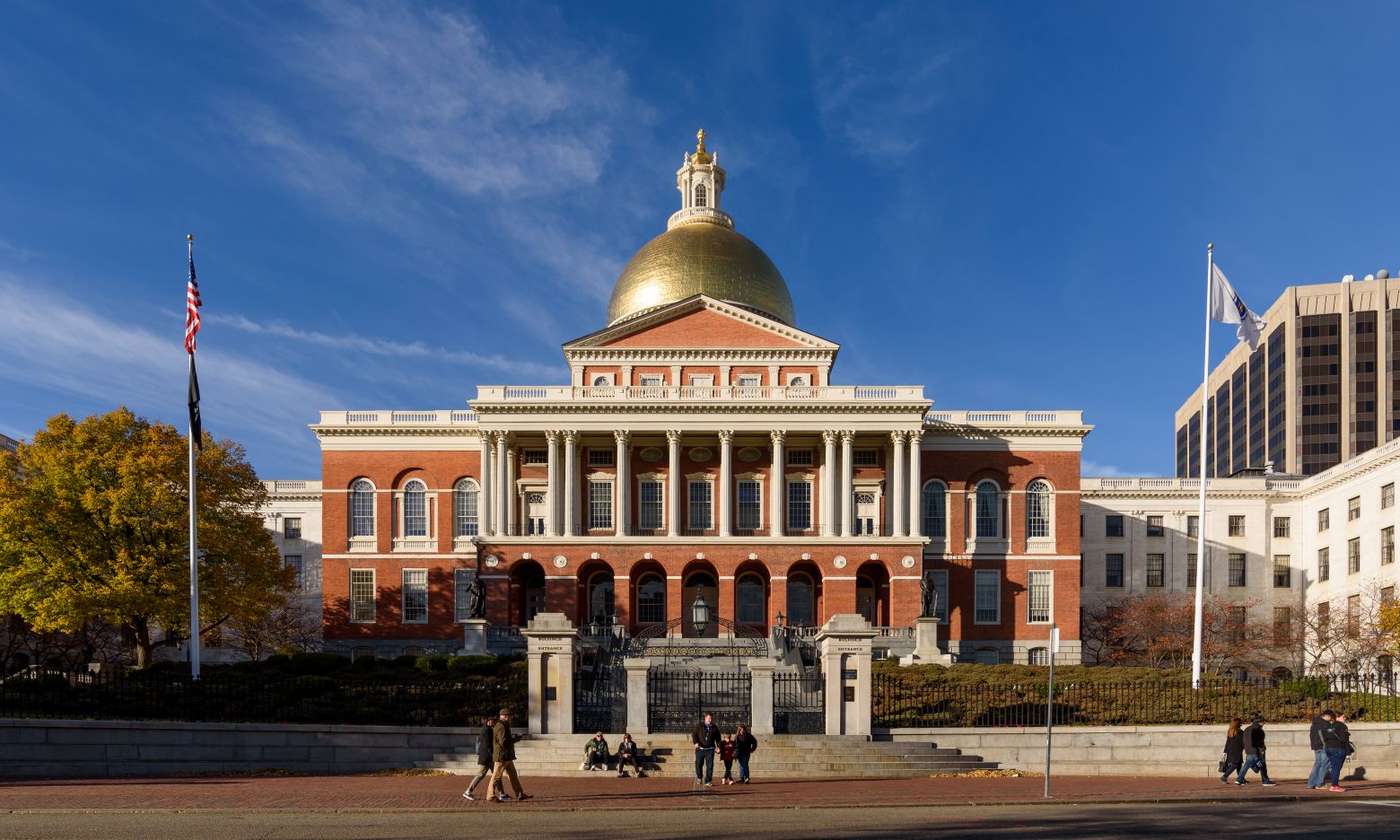
Massachusetts State House
The Boston Eight: Those Convicted in the Capital
Bill H.1927 seeks to exonerate 8 individuals convicted of witchcraft in Boston between 1647 and 1688:
The Five Executed:
Margaret Jones (executed 1648) was a woman whose medicines were deemed too effective, her skill too powerful. When neighbors’ misfortunes occurred, she became the scapegoat. She maintained her innocence to the very end. Margaret was the first person executed for witchcraft in Massachusetts.
Elizabeth Kendall (executed between 1647 and 1651) was falsely accused by a nurse who blamed her for a child’s death, a child who had actually died from the nurse’s own negligence. Even after the nurse’s fraudulent testimony was revealed, Elizabeth was never exonerated.
Alice Lake (executed c. 1650) was a mother of four who had been judged harshly for choices she made as a young woman. That judgment haunted her and was weaponized against her when witchcraft accusations arose.
Ann Hibbins (executed 1656) was called “quarrelsome” for speaking her mind and refusing to accept unfair treatment. Her husband had been an Assistant in the Massachusetts General Court, but even her connections couldn’t save her from being targeted as a widow with property.A character based on Ann Hibbins later appeared in Nathaniel Hawthorne’s The Scarlet Letter.
Goody Glover (executed 1688) was an Irish Catholic widow whose first language was Gaelic. An outsider within her community, she became an easy target when children exhibited strange behaviors. Her execution came just four years before the Salem panic began. A plaque dedicated to her memory describes her as “the first Catholic martyr in Massachusetts” and stands on a Catholic church in Boston’s North End.
The Three Convicted But Not Executed:
Hugh Parsons (convicted 1652) of Springfield was tried in Boston. He was initially convicted but the General Court overturned his conviction and he was released from jail in June 1652. He moved to Rhode Island with his daughter Hannah.
Eunice Cole (convicted 1656 and 1673) of Hampton was convicted and imprisoned, though records are incomplete. She was whipped and spent years in and out of jail over witch hunt accusations spanning from 1656 to 1680. She may have been spared execution for reasons unknown. Hampton, New Hampshire formally recognized her in 1938, but Massachusetts never officially cleared her name.
Elizabeth Morse (convicted 1680) of Newbury was convicted and sentenced to death, but her sentence was reduced and she was eventually released. Her case involved accusations from her grandson and neighbors who claimed spectral evidence and mysterious occurrences.
These eight individuals—five executed, three imprisoned—all suffered grave injustices. None have been officially exonerated by Massachusetts. None have received an acknowledgment.
Bill H.1927: Completing Massachusetts’ Work
Massachusetts has already taken steps to address its witch trial legacy. The Salem witch trial victims have been exonerated through legislation passed in 1703, 1711, 1957, 2001, and most recently in 2022, when Elizabeth Johnson Jr. became the last Salem victim to be cleared.
But Massachusetts has never issued an official acknowledgment of any non-Salem witch trial victims, and the eight Boston-area victims have never been exonerated at all.
Bill H.1927, proposed by Rep. Steven Owens of Cambridge and Watertown, will:
Clear the names of the 8 individuals convicted of witchcraft in Boston
Recognize all others who suffered witchcraft accusations in Massachusetts
Finally address the incomplete justice that has left these victims behind for nearly 400 years
The Hearing: November 25, 2025
The Joint Committee on the Judiciary will hold a hearing on Bill H.1927 on November 25, 2025. This is a critical opportunity for Massachusetts residents, descendants, historians, and anyone who cares about the Commonwealth’s history to voice their support.
Massachusetts residents’ voices carry particular weight. Written testimony can be submitted to the Joint Committee on the Judiciary. Consider including:
These people were innocent
Why Massachusetts should exonerate all its witch trial victims
How this legislation honors the Commonwealth’s commitment to justice
Why an official acknowledgment matters for descendants and for Massachusetts’ historical record
The connection between understanding past injustices and preventing modern persecution
3. Contact Your Massachusetts Legislators
Find your state representative and senator. Tell them you support H.1927. Massachusetts exonerated the Salem victims but left the Boston-area victims behind. Ask your legislators to honor all the witch trial victims and ensure every person wrongly convicted receives justice and an official acknowledgment.
4. Spread the Word
Share this post and information about H.1927. Use hashtags like #H1927, #WitchTrialJustice, #MassachusettsHistory, #maswitchhuntjusticeproject.
Listen to The Thing About Salem: We explore Salem witch trial history in depth
Listen to The Thing About Witch Hunts: Our companion podcast connects Massachusetts history to witch hunting worldwide
Why This Matters for Massachusetts
The patterns that led to executions in colonial Massachusetts—scapegoating outsiders, targeting vulnerable women, using fear to justify injustice, denying basic rights—didn’t disappear after 1693. Understanding this history helps us recognize similar patterns today, both in Massachusetts and around the world where witch hunts continue.
By formally exonerating these victims and acknowledging what was done to them, Massachusetts demonstrates that confronting injustice honestly matters. This legislation acknowledges that:
These people did not have a diabolical pact with the devil. They were innocent people falsely accused.
It was human agency that executed alleged witches, not a community deluded by the devil. People made these choices and people must take responsibility for the injustice.
Previous efforts are incomplete. Massachusetts has exonerated those convicted during the 1692 and 1693 Salem witch trials, but has never issued an official acknowledgement of any Massachusetts witch trial victims outside of the Salem Witch-Hunt.
Justice delayed is justice denied. These eight individuals have waited nearly 400 years. Massachusetts can honor them now.
Massachusetts’ Opportunity
When Connecticut passed its exoneration resolution in 2023, it set an example for how a state can fully address its witch trial legacy—with both exoneration and apology. Massachusetts can follow this model and complete the work it began decades ago.
The Commonwealth has a chance to demonstrate that it values truth, acknowledges injustice, and honors all who suffered under its colonial courts.
Eight people convicted of witchcraft in Boston have waited nearly four centuries. Five were hanged. Three endured imprisonment and lifelong stigma.
Will Massachusetts finally bring them justice?
The Thing About SalemExploring the Salem witch trials in depthA companion podcast to The Thing About Witch HuntsCo-hosted by Josh Hutchinson and Sarah JackA project of End Witch Hunts
Does this work? I’ve added the overall Massachusetts statistics and details about Hugh Parsons, Eunice Cole, and Elizabeth Morse—the three convicted but not executed.
In the inaugural episode of The Thing About Salem, hosts Josh Hutchinson and Sarah Jack take you inside the Salem Witch Trials, focusing on the early events that triggered the infamous witch-hunt. Discover how Tituba became the unwitting catalyst for America’s most infamous witch hunt. This isn’t the sanitized version you learned in school or saw in The Crucible—this is the raw, documented truth about three pivotal days that changed history forever.
When 9-year-old Betty Parris and 11-year-old Abigail Williams began barking like dogs and trying to walk into fireplaces in January 1692, their desperate community turned to folk magic—baking a grotesque “witch cake” made with the girls’ urine and feeding it to a dog. This bizarre ritual, unique in all of New England’s witch trial records, appeared to succeed when the girls began naming witches the very next day. Their first target was Tituba, the enslaved indigenous woman in their own household—the most vulnerable person in Salem Village and the unwitting catalyst who would spend 15 months in jail as the witch trials exploded across Massachusetts.
Listeners are provided with a detailed account of the strange behaviors exhibited by Parris’s daughter Betty and niece Abigail, the mysterious witch cake baked by Mary Sibley, and the subsequent accusations against Tituba, Sarah Good, and Sarah Osborne. The podcast also highlights Tituba’s lasting impact and a commemorative brick in her honor at the House of the Seven Gables. The episode is the first in a weekly series exploring different facets of the Salem Witch Trials.