In this episode, we move beyond the fictionalized drama of Arthur Miller’s The Crucible to uncover the real Elizabeth Procter. Born into a family already shadowed by witchcraft accusations, Elizabeth faced the full weight of the 1692 panic. We trace her journey from a high-profile examination in front of the colony’s top officials to her harrowing months in prison.
What You’ll Learn
- The “Inheritance” of Suspicion: How Elizabeth’s grandmother, Ann Burt, influenced the community’s perception of her long before the trials began.
- The High-Stakes Examination: Details of the April 11th hearing where Elizabeth stood her ground against the afflicted girls and the highest court in Massachusetts.
- A Life-Saving Pregnancy: The legal reason Elizabeth survived the gallows while her husband, John, did not.
- The Fight for Restitution: Elizabeth’s post-trial battle to reclaim her legal personhood and property after being declared “dead in the eyes of the law”.
- Fact vs. Fiction: We debunk common myths regarding the Procter family’s ages and relationships that were popularized by 20th-century drama.
Featured Quotes
“I know nothing of it, no more than the child unborn.”
Tune in to hear how one woman’s fierce determination allowed her to dismantle an unjust legal system and reclaim her life.
Transcript
Josh Hutchinson: Welcome to Salem Witch Trials Daily. I'm Josh Hutchinson.
Sarah Jack: This is Sarah Jack. Today, Saturday, April 2, 1692. Elizabeth Procter and Rebecca Nurse's Spectors, allegedly afflict Abigail William's
Josh Hutchinson: According to Abigail, this happened on several occasions in March and April. In testimony, accusers would often provide lists of dates like this when they had been attacked spectrally, just numbering the second, third, fourth, 17th of March, things like that. And this is one of the reasons why we go through the events day by day so that we understand what the daily life was like for those involved in the witch-hunt.
Sarah Jack: Abigail describes these attacks saying she felt "grievously pinched" and "had also her bowels almost pulled out."
Josh Hutchinson: The Elizabeth [00:01:00] Procter specter reportedly tempted Abigail with fine things in exchange for signing a book.
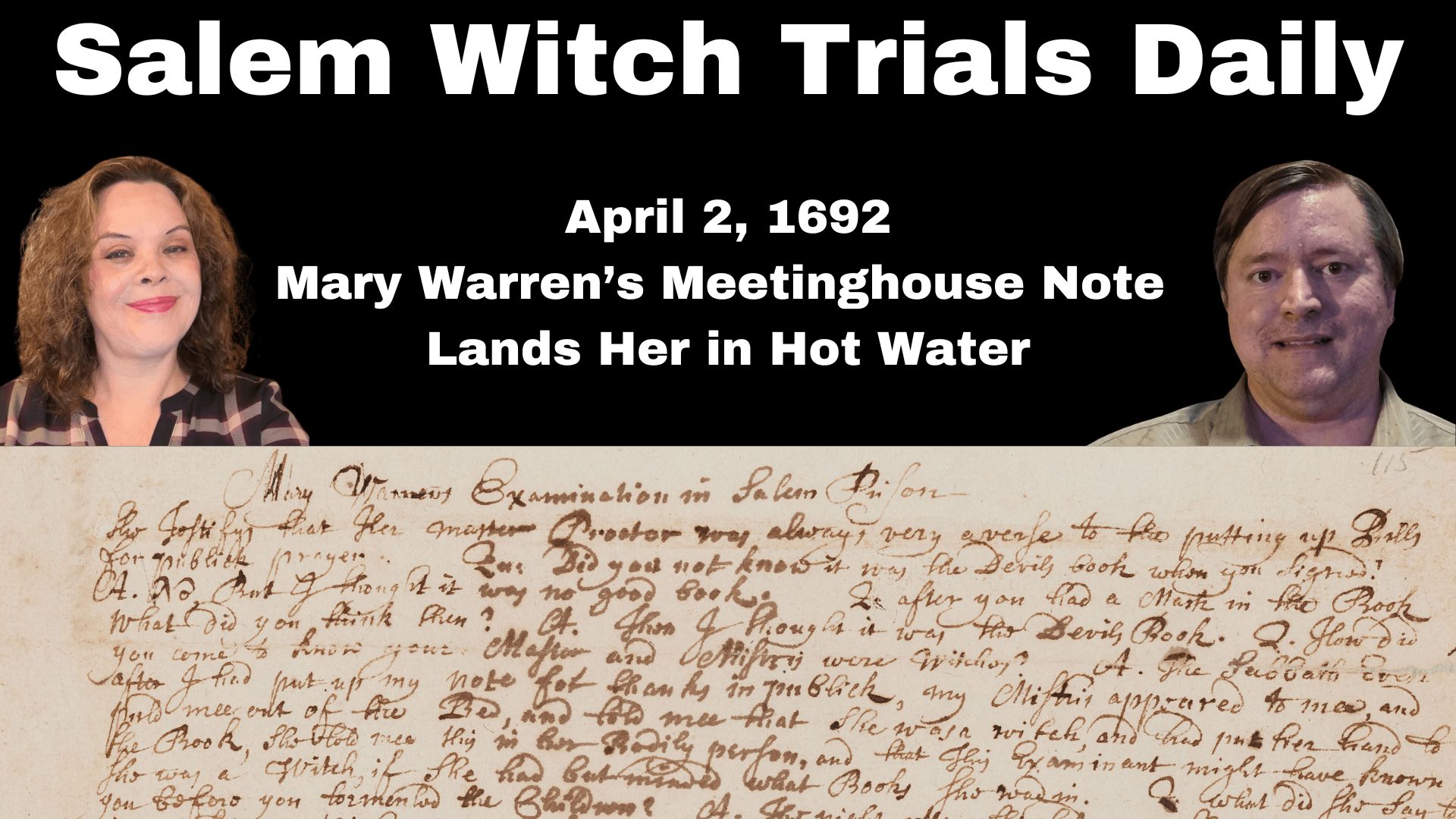
Sarah Jack: Elsewhere in Salem Village, Mary Warren, who worked for the Proctors, had recovered from her affliction and now put a note at the meetinghouse asking for prayers of gratitude for her recovery.
Josh Hutchinson: Stay tuned this month for the aftermath of Mary pinning this note. There will be serious drama.
Sarah Jack: In the immediate wake of the note posting, according to Mary's later testimony, Elizabeth Procter appeared to Mary that night, pulled her out of bed and confessed that she was a witch and had signed the book.
Josh Hutchinson: Mary said that quote, she told me this in her bodily person. This means that it wasn't Elizabeth's specter visiting her, it was Elizabeth herself.
Sarah Jack: Occasionally, we see complaints referenced bodily attacks made by physical people, but as you'll see, [00:02:00] it is far more common to read of spectral assaults by the shapes of the witches.
