Show Notes
Episode Description
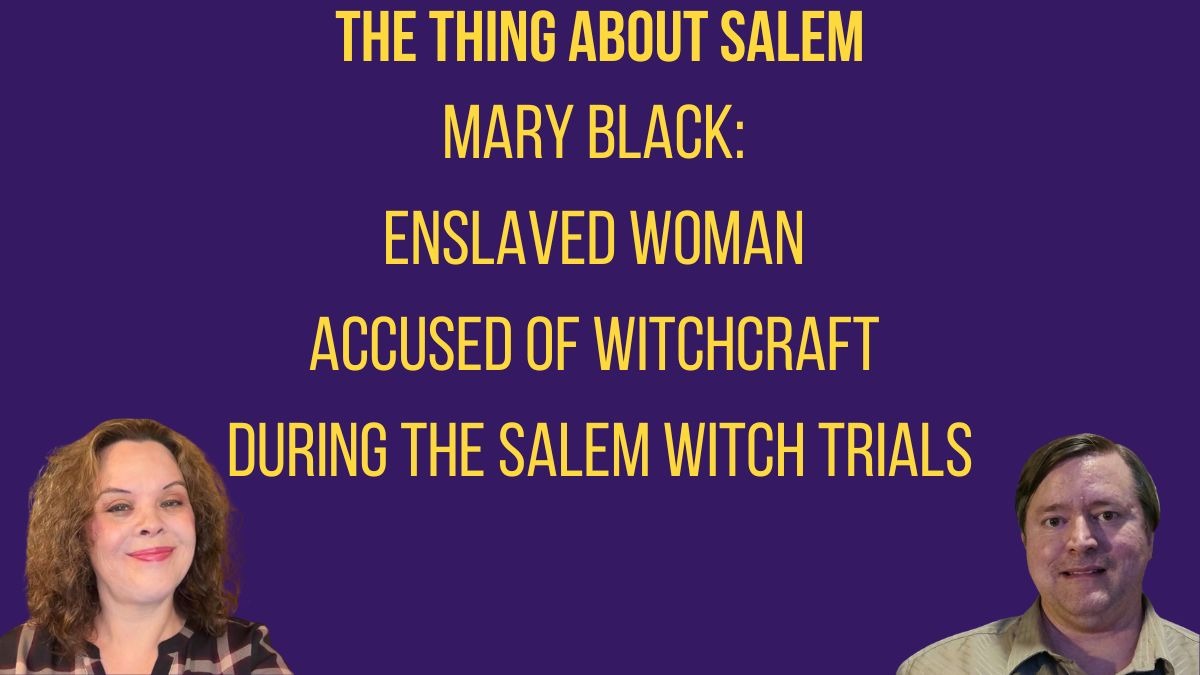
This episode examines the story of Mary Black, an enslaved woman accused of witchcraft in April 1692, and the complex household she lived in. Mary Black was owned by Nathaniel Putnam, a politically active Salem Village leader who opposed Reverend Parris before the trials began and later defended Rebecca Nurse—yet left no documented advocacy for the enslaved woman in his own household.
What You’ll Learn
- The racial dimensions of the Salem witch trials and how court records identified accusers differently
- How Mary Black’s experience contrasts with white accused women who had community defenders
- Nathaniel Putnam’s complex role: opposing Parris, defending Rebecca Nurse, while owning Mary Black
- The stark silences in historical sources around enslaved and women of color in colonial New England
- Mary Black’s examination, nine-month imprisonment, and eventual clearing by proclamation
Key Figures Discussed
- Mary Black – African enslaved woman accused April 21, 1692
- Nathaniel Putnam – Mary’s owner, Salem Village political leader
- Rebecca Nurse – white woman Nathaniel defended
Keywords: Salem witch trials, Mary Black, enslaved women, Nathaniel Putnam, racial history, colonial New England, 1692, Tituba, Rebecca Nurse, Salem Village
Links
Salem Witch Trials Daily Videos & Course
The Thing About Witch Hunts YouTube
The Thing About Witch Hunts Website
Sign the Petition: MA Witch Hunt Justice Project
www.massachusettswitchtrials.org
Support the nonprofit End Witch Hunts Podcasts and Projects
Bernard Rosenthal, ed., Records of the Salem Witch-Hunt
Emerson W. Baker, A Storm of Witchcraft: The Salem Trials and the American Experience
Marilynne K. Roach, The Salem Witch Trials: A Day-by-Day Chronicle of a Community Under Siege
Mary Beth Norton, In the Devil’s Snare: The Salem Witchcraft Crisis of 1692
Peabody Essex Museum Salem Witch Trials Collection
Leave a Reply