Show Notes
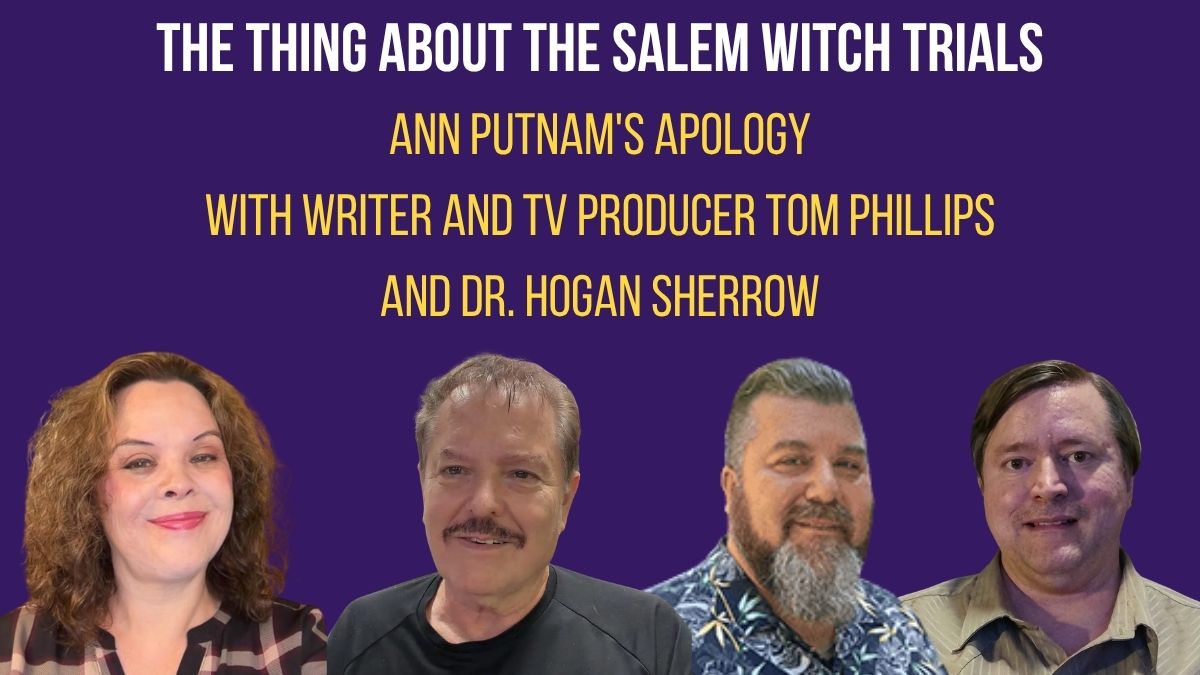
Why Did Ann Putnam Jr. Accuse? Evolutionary Behavioral Reconstruction and the Human Story Behind Salem We welcome producer-director Tom Phillips and evolutionary anthropologist Dr. Hogan Sherrow to explore the psychological research informing Phillips’ project Aftermath and to confront a question that has lingered for more than 330 years: why 12-year-old Ann Putnam Jr., a central accuser in the Salem witch trials and the only known accuser to publicly apologize, did what she did. Using Sherrow’s “evolutionary behavioral reconstruction,” they examine Ann as a human being shaped by life history, Puritan cultural context, family pressures, possible mental or behavioral conditions, and the community’s belief in the devil as an everyday reality. They discuss how children’s networks, prior witchcraft cases, and Samuel Parris’s library may have supplied models to imitate, how grief and household instability may have acted as triggers, and how Ann’s courtroom influence helped reverse Rebecca Nurse’s verdict, while weighing whether Ann was deluded, mistaken, manipulated, or lying and scrutinizing the language and signature of her 1706 apology.
Chapters
00:00 Welcome and Setup
00:27 Why Ann Putnam
01:35 Project and Method
03:55 Reconstruction Basics
06:03 Age and Puritan Context
08:17 Witchcraft Idea Spreads
13:50 Triggers and Family Grief
17:24 Courtroom Power
19:29 Mental Health Possibilities
21:52 The 1706 Apology
24:33 Signature Doubts
27:31 Aftermath Monologue
29:50 Closing and Call to Share
Links
- World Day Against Witch Hunts
- The Thing About Witch Hunts
- Salem Witch Trials History YouTube
- Salem Witch Trials Daily