Show Notes
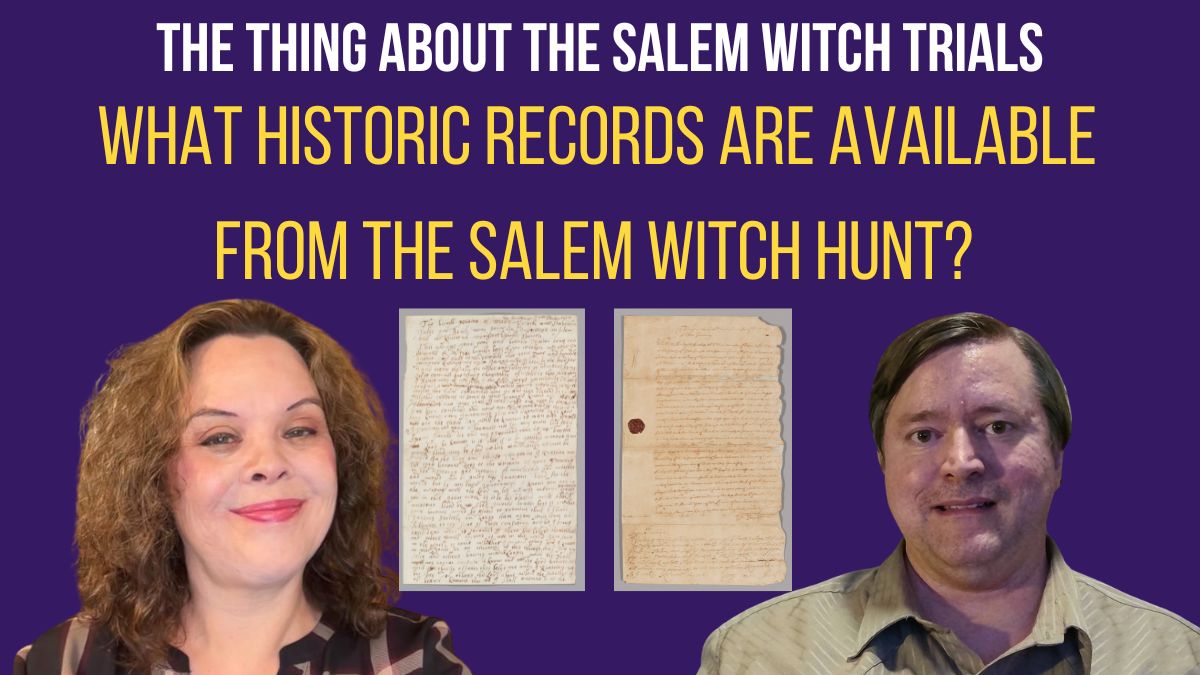
We dig into the biggest surprise at the heart of the 1692 Salem Witch Trials: the official Court of Oyer and Terminer record book is gone, and what people call “trial records” are mostly pretrial examinations, warrants, depositions, bills, diaries, and printed observers’ accounts. We explain how magistrates like John Hathorne and Jonathan Corwin shaped the surviving dialogue-style transcripts, why those documents get mistaken for trial proceedings, and what sparse trial records typically looked like by comparing to the surviving 1693 Superior Court files. We trace how writers such as Cotton Mather, Robert Calef, Thomas Brattle, John Hale, Increase Mather, and others preserved competing narratives, and how Samuel Sewall’s diary fills crucial gaps. We spotlight the decade-long scholarly effort behind the 2009 Records of the Salem Witch-Hunt, the myths it overturns (including confessors being tried and executed), and how New England and even Scotland show how missing records can distort history for centuries.
Chapters
00:00 What Records Survive
01:09 Examinations Not Trials
03:07 How Trials Worked
04:31 Published Accounts Clash
06:31 Proving Records Existed
08:37 Where Records Went Missing
09:52 Scribes Shape History
11:38 Records of the Salem Witch Hunt
13:58 Myths the Paperwork Busts
14:44 Beyond Salem and Abroad
16:59 Other Sources and Daily Paper
18:20 The Devil’s Book That Never Was
19:50 Voices of the Accused
20:26 Why Records Matter
Links
- End Witch Hunts
- The Thing About Witch Hunts
- The Thing About the Salem Witch Trials
- Connecticut Witch Trials History
- Watch us on YouTube
- Samuel Wyllys Papers (CT State Library)
- Samuel Wyllys Papers (Brown University)
- Salem Witch Trials Documents – High Quality Scans
- Buy Books from our Bookshop
- Join us at CT Witch & Culture Fest 2026
- Watch us present at History Camp Boston 2026