Show Notes
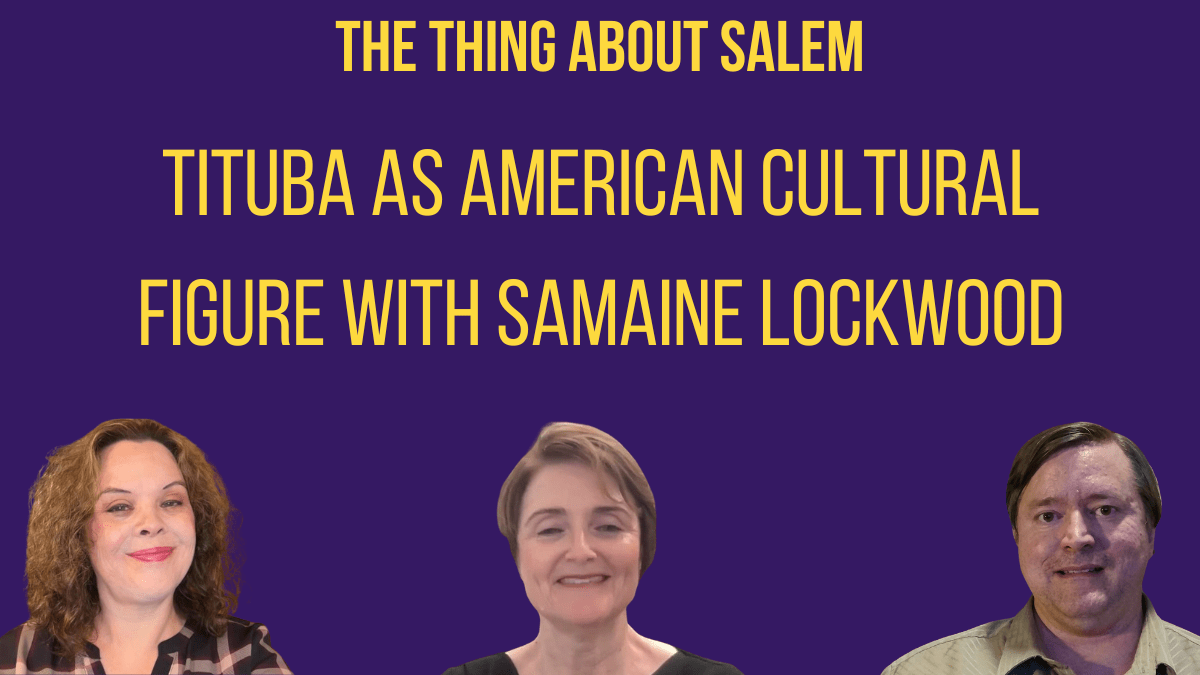
For International Women’s Day and Women’s History Month, The Thing About Salem takes a deep look at one of the Salem witch trials’ most fascinating and misrepresented figures: Tituba Indian. Who was she, and why have writers, scholars, and storytellers kept returning to her story for two centuries?
Joining Josh and Sarah is Samaine Lockwood, associate professor of English at George Mason University and the 2026 Fenwick Fellow, whose forthcoming book traces Tituba’s transformation as an American cultural figure from 1820 to the present.
In this episode, you’ll discover:
- Why Tituba is largely absent from 19th-century Salem novels, and what her absence reveals about race and citizenship in post-Civil War America
- How wrongfully accused white women in historical fiction were shaped into symbols of ideal democratic citizenship, while Tituba was cast as their opposite
- Which overlooked novels and authors are essential to understanding how Salem has been reimagined across American literary history
- Why Black feminist writers like Ann Petry and Maryse Conde were the first to place Tituba at the center of the story, and why that matters
- What Samaine’s research trip to Salem will examine about how Tituba is represented in today’s memorial and tourist spaces
This episode also includes an invitation to the live International Women’s Day panel Justice for Women Accused of Witchcraft in Africa, taking place Sunday, March 8th at 6:30 PM GMT. Join Dr. Leo Igwe, Chief Magistrate Safiya Musa Salihu, Dr. Barrister Dise Ogbise Goddy Harry, broadcast journalist Hauwa Mundi, and Maimonat Mohammad for a conversation on gender, justice, and witchcraft accusations today. Register at endwitchhunts.org/iwd.
Links
Publications by Samaine Lockwood
Buy Books Mentioned in Today’s Episode
Sign the Petition to Exonerate the Boston 8
The History of Witch Trial Exonerations in Massachusetts
About the MA Witch Hunt Justice Project
Purchase a MA Witch Hunt Justice Project Memorial Pin
Attend Free Event March 8, 2026: Woman Accused of Witchcraft in Africa