Watch Salem Witch Trials Daily
Show Notes
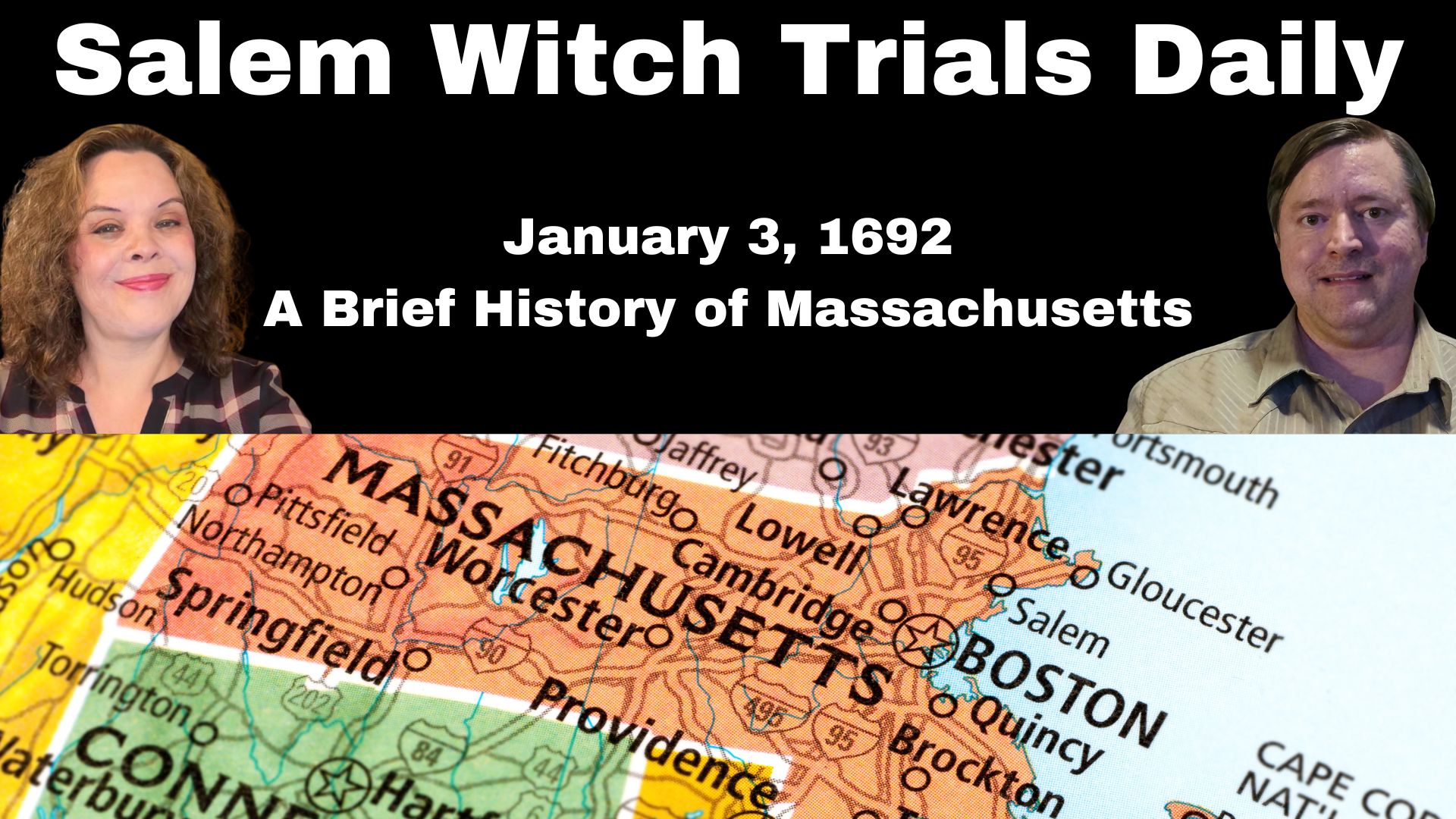
How did Massachusetts become what it was in 1692? We look into this question in today’s Salem Witch Trials Daily.
We highlight the founding of Salem and Boston, the establishment of the Massachusetts Bay Colony, the colony’s first legal code, and more.
Keep coming back every day as we continue to explore the witch trials and their context throughout the year.
Links
Select Salem Witch Trials Books:
- Bernard Rosenthal, ed., Records of the Salem Witch-Hunt
- Emerson W. Baker, A Storm of Witchcraft: The Salem Trials and the American Experience
- Marilynne K. Roach, The Salem Witch Trials: A Day-by-Day Chronicle of a Community Under Siege
- Mary Beth Norton, In the Devil’s Snare: The Salem Witchcraft Crisis of 1692
Transcript
January 3 - The History of Massachusetts
Josh Hutchinson: Salem, the Massachusetts Bay Colony's first city, celebrates its 400th anniversary this year, and this focus on the history of the city has us thinking, what about the history of the colony? How did Massachusetts become what it was in 1692? Welcome to Salem Witch Trials Daily for January 3rd. I'm Josh Hutchinson.
Sarah Jack: I am Sarah Jack.
Sarah Jack: For 10,000 years or more before the Europeans came, Massachusetts was occupied by Native Americans. In the 16th century, the Europeans came to New England to fish and to trap game where those Native Americans were living. A series of epidemics decimated the native population, especially along the coast where contact with the exotic, disease-carrying Europeans was very common.
Sarah Jack: Then in the [00:01:00] 17th century, English colonists tried to start settlements in several locations. These ventures failed until 1620 when the Mayflower pilgrims landed at Plymouth.
Josh Hutchinson: They formed Plymouth Colony and then in 1626 on Cape Ann, Salem was founded by Roger Conant, who had established a fishing village at Naumkeag, the site of a previous Native American settlement. Naumkeag means fishing place.
Sarah Jack: You can see a statue of this founder of Salem Roger Conant, right outside of the Salem Witch Museum. People often mistake it for the statue of a witch or a generic puritan. It's specifically Roger Conant. In 1628, Massachusetts was founded by the Massachusetts Bay Company. So, at this point in time you had the Plymouth Colony in the South and Massachusetts Bay [00:02:00] Colony to the north of that. In 1629, King Charles I issued a charter so that the Massachusetts Bay Colony could govern itself. The town of Boston was founded in 1630 and it was made the seat of the colonial government, authorized by that charter.
Josh Hutchinson: Yes. This was when they moved the capitol away from Salem, where they initially set up camp. And then in the 1630s, there was an explosion of immigration to New England, as approximately 20,000 Europeans came over to settle the colonies. In 1641, the first New England legal code was set down. This was called the Massachusetts Body of Liberties, and it set out the rights of the residents of [00:03:00] Massachusetts. Then in 1648, this book and other laws were put together into The Book of the General Laws and Liberties Concerning the Inhabitants of Massachusetts.
Sarah Jack: And it wasn't long. Before there were accused witches between 1648 and 1691, many people were indicted in Massachusetts on witchcraft charges. Eight were convicted, five were executed, and two women were jailed or placed under house arrest.
Josh Hutchinson: The one man who was accused, his conviction got overturned and then he fled to Rhode Island with his daughter. That was Hugh Parsons of Springfield. In 1684, the cherished charter of Massachusetts Bay Colony was revoked by King James II, throwing the colony into some [00:04:00] disarray.
Josh Hutchinson: Then two years later, King James II established the Dominion of New England, which was a supercolony that ran all the way from what's now New Jersey, up to Nova Scotia, and included all of the New England colonies and New York under one royally appointed Governor, Edmund Andros, who was a very unpopular figure in New England, because he was very harsh on Massachusetts, in the opinions of the leaders and residents. He got overthrown two years later. The Glorious Revolution happened in England. This is when King William and Queen Mary came from the Netherlands to take the throne away from King James II. And while that was happening there, once the colonists got word of it, several weeks later, they stormed the Capitol in Boston and arrested Edmond Andros and [00:05:00] sent him back to England.
Sarah Jack: From that time, 1688 to 1692, Massachusetts was led by an interim government resulting in jail overcrowding as the colony lacked courts to try suspects.
Josh Hutchinson: In 1691, Massachusetts finally got the charter it had been working for years to regain, but this new charter was controversial.It included clauses like Massachusetts had to be tolerant of other religious beliefs. In addition to Puritanism, they had to tolerate the Anglicans and the Baptists and the Quakers, who they did not tolerate at all before this. So they were very upset.
Sarah Jack: him.
Josh Hutchinson: They were persecute, they executed Quakers just for being Quakers.
Josh Hutchinson: But finally this charter, it was issued by King William in October, and then it arrived in the colony of Massachusetts the following [00:06:00] February. So February to May, you still have this kind of quasi legal status, because the new governor, he doesn't arrive until the middle of May, after the jails were already packed with witchcraft suspects. This is just a little introduction to the history of Massachusetts. I know we didn't go into a lot of detail, but tomorrow you can come back and we're gonna dig into the founding of Salem.
Sarah Jack: The Salem Witch Trials Daily is presented by The Thing About Salem and The Thing About Witch Hunts podcasts. Join us every Sunday and Wednesday for deeper explorations of the Witch trials of the past and the witchcraft persecution of today.
Leave a Reply