Show Notes
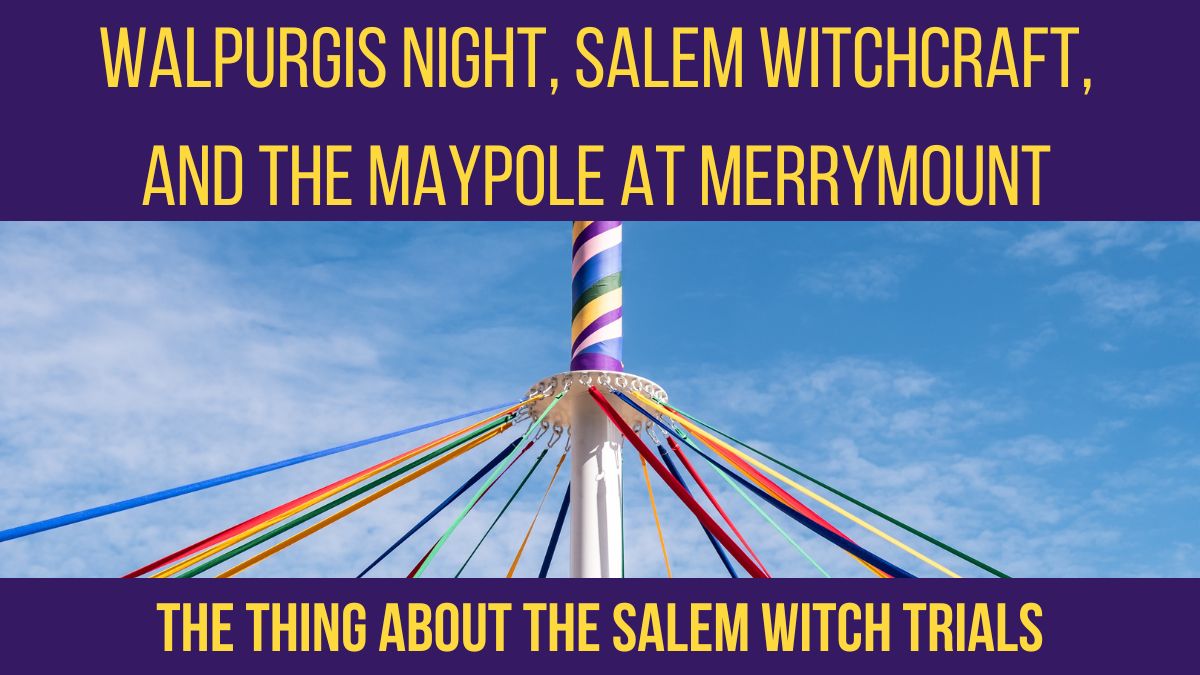
Every April 30, bonfires burn across Europe on the same night witches were said to gather on a mountaintop and make their covenant with the devil. That image did not stay in Europe. It crossed the Atlantic, embedded itself in colonial New England theology and law, and by 1692 it was being sworn to in witchcraft trials that sent nineteen people to their deaths. In this episode, hosts Josh Hutchinson and Sarah Jack follow that thread from a German mountain to a Danvers pasture — and the path runs straight through a Maypole, a folk magic discovery hidden inside a colonial home, a decades-old grudge over rancid butter, and a pear tree that has been standing since before the trials began and is still standing right now.
In this episode, you will learn:
- Why Walpurgis Night and the Salem witchcraft sabbath descriptions share the same historical roots
- How one colonial settler’s May Day celebration became a theological threat to Puritan authority
- What a single word in William Bradford’s writing reveals about how Puritans understood folk magic and social control
- Why witchcraft gathering testimony carried such evidentiary weight in colonial Massachusetts courts — decades before Salem
- How one man’s actions in the 1620s left a thread running directly through the 1692 witch trials
- What a 400-year-old pear tree in a Danvers parking lot has to do with the Salem witch trials
The Thing About the Salem Witch Trials is part of the End Witch Hunts podcast network. Learn more at endwitchhunts.org.
Links
- Salem Witch Trials History YouTube
- The Thing About the Salem Witch Trials
- Salem Witch Trials Daily
- The Thing About Witch Hunts
- Support Our Work, Buy a Salem Witch Trials History Book!
Leave a Reply